Archives
- 2026-09
- 2026-08
- 2026-07
- 2026-06
- 2026-05
- 2026-04
- 2026-03
- 2026-02
- 2026-01
- 2025-12
- 2025-11
- 2025-10
- 2025-09
- 2025-03
- 2025-02
- 2025-01
- 2024-12
- 2024-11
- 2024-10
- 2024-09
- 2024-08
- 2024-07
- 2024-06
- 2024-05
- 2024-04
- 2024-03
- 2024-02
- 2024-01
- 2023-12
- 2023-11
- 2023-10
- 2023-09
- 2023-08
- 2023-07
- 2023-06
- 2023-05
- 2023-04
- 2023-03
- 2023-02
- 2023-01
- 2022-12
- 2022-11
- 2022-10
- 2022-09
- 2022-08
- 2022-07
- 2022-06
- 2022-05
- 2022-04
- 2022-03
- 2022-02
- 2022-01
-
br Sources of funding This work was supported by grants
2022-04-02
Sources of funding This work was supported by grants from the Canadian Institutes of Health Research (CIHR) (No. MOP-111096) and from the Heart and Stroke Foundation of Canada awarded to Dr. Danielle Jacques. Disclosures Acknowledgments Introduction A large number of epidemiological, hu
-
Introduction Pneumocystis pneumonia PCP is a respiratory inv
2022-04-02
Introduction Pneumocystis pneumonia (PCP) is a respiratory invasive infection caused by Pneumocystis jirovecii, an ubiquitous fungus. It is transmitted by air and mostly infects immunocompromised patients. PCP is characterized by respiratory complaints of cough, dyspnea, but also tachycardia, low g
-
Production of reactive oxygen species ROS at the
2022-04-02
Production of reactive oxygen species (ROS) at the site of pathogen attack following recognition of pathogen-associated molecular patterns (PAMPs) is regarded as one of the initial plant immune responses. ROS accumulation can induce a hypersensitive reaction in host plants, thereby causing programme
-
In the present study we investigated the
2022-04-02
In the present study, we investigated the mechanisms underlying the ability of 5-FU to modify histone acetylation. Our results suggested that 5-FU induces global histone de-acetylation in CRC by promoting the degradation of p300 and CBP, two important homologous HATs catalyzing acetylation at multip
-
br Discussion Our results showed that the histamine H recept
2022-04-02
Discussion Our results showed that the histamine H1 receptor antagonist/inverse agonists, pyrilamine and cetirizine, attenuated not only NMDAR-mediated synaptic current but also LTP in Shaffer collateral-CA1 pyramidal neuron synapses. The H1 receptor antagonist/inverse agonist-induced attenuation
-
br Materials and methods br Results br
2022-04-02
Materials and methods Results Discussion Several histamine H3 receptor antagonists have progressed into clinical development for indications including Alzheimer's disease, schizophrenia, pain and narcolepsy. Each of the compounds studied herein has been extensively characterized in its own
-
br HO regulation and physiology
2022-04-02
HO-1: regulation and physiology The catabolism of cellular heme in humans and other species is mediated by the heme oxygenase (HO) family of enzymes (E.C. 1:14:99:3; heme-hydrogen donor:oxygen oxidoreductase). The HOs localize primarily to the endoplasmic reticulum (ER) where they serve, in conce
-
br Conclusion Whilst acknowledging that
2022-04-02
Conclusion Whilst acknowledging that forensic science critically needs strategic investment across every domain [27], forensic science needs to bring both ‘hedgehog’ and ‘fox’ approaches together to address the roots of the major challenges the discipline faces. Addressing these challenges in a w
-
However HDACi can also increase the acetylation of other
2022-04-02
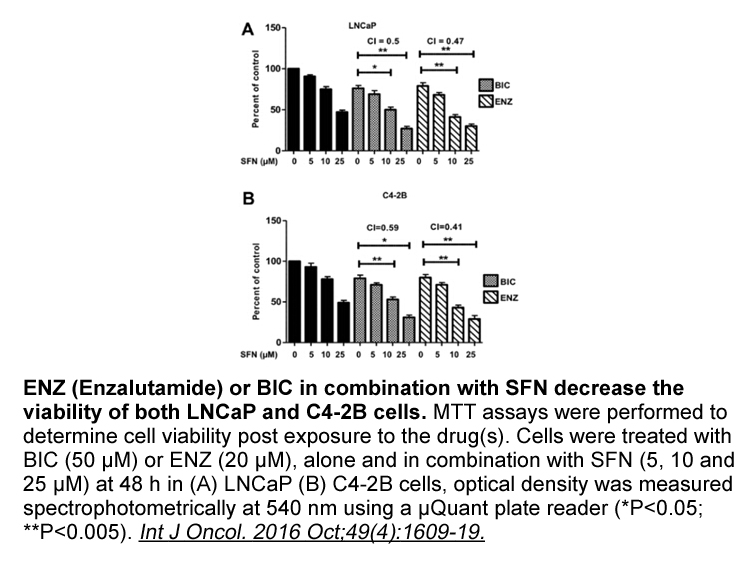
However, HDACi can also increase the acetylation of other transcription factors that regulate p65 transcriptional activity. The HDACi-induced activation of p65 can be negated by acetylated STAT1, which can specifically bind to p65 and inhibit its transcriptional activity 81, 82, 83. Interestingly, a
-
Polyunsaturated fatty acid components of brain
2022-04-02
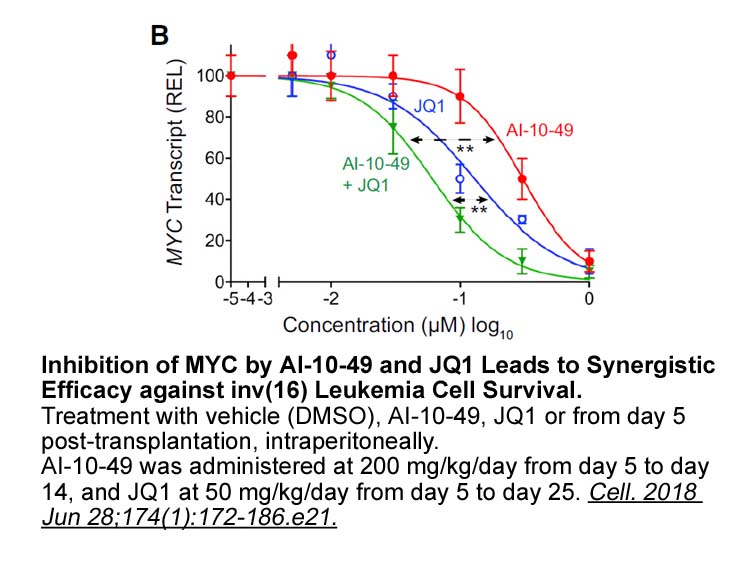
Polyunsaturated fatty caspofungin components of brain are more prone to oxidative attack, an event called lipid peroxidation. Consistent with previous findings on neurotoxicity [58,59], colistin sulphate increased the level of MDA in the brain of rats. The elevated MDA, a consequence of overwhelmed
-
Measured physicochemical water parameters including conducti
2022-04-02
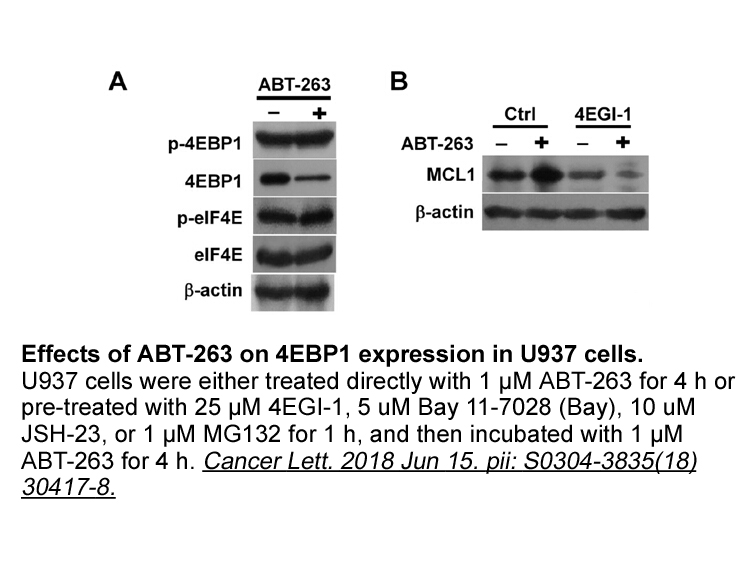
Measured physicochemical water parameters including conductivity, suspended solids and nutrient load along the studied sites (Table 1) were high compared to levels usually found in undisturbed rivers within Europe (Chapman and Kimstach, 1996). In particular conductivity, suspended solids and phospha
-
The involvement of prostaglandins on the effects
2022-04-02
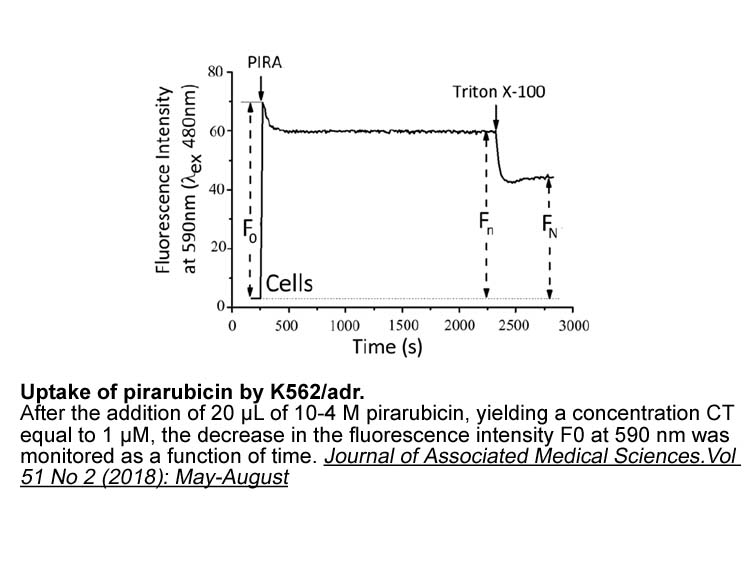
The involvement of prostaglandins on the effects induced by 1-nitro-2-phenylethane is similarly unlikely because vasorelaxation was not changed by indomethacin [20]. The inhibition of adenylyl cyclase with MDL-12330A [21] or cAMP-dependent protein kinase A with KT-5720 [22] also did not interfere wi
-
We observed that the Toc G domain recognizes the N
2022-04-02
We observed that the Toc159G domain recognizes the N-terminal portion of the transit peptide of pSSU with a dissociation constant of 70 μM (Fig. 2; Table 1), while a tenfold higher KD was obtained for the phosphorylated C-terminal region. In turn, the homodimer of Toc34G recognizes the phosphorylate
-
In order to determine whether NF
2022-04-02
In order to determine whether NF-κB could interact with GSTP1-1 promoter, we performed EMSA. One NF-κB like (−98κB) binding site was previously described in the GSTP1-1 promoter as a regulator element. However, few data about this site have been published and its role in the GSTP1-1 gene regulation
-
In summary we have successfully
2022-04-02

In summary, we have successfully identified a series of potent and selective GSNOR inhibitors having imidazole and tetrazole functional groups in both end of the core structure and many compounds have been identified with IC: Introduction Peppers (Capsicum annuum L.), tomatoes and potatoes, belon
8733 records 525/583 page Previous Next First page 上5页 521522523524525 下5页 Last page